The notebook
Few magic formulas are as reliable for a birthday party or a rainy afternoon as a tournament. Not casual "let's just play" — a TOURNAMENT, with a bracket drawn on paper, a proper final and an award ceremony. The difference between the two is pure theatre — and theatre is free. This guide works equally for physical tabletop football, foosball, a console or a browser game: what matters is the format, not the pitch.
With four players or fewer, go round-robin (everyone plays everyone): nobody goes home after one match, and the drama builds naturally towards the last round. With six or eight, the classic knockout bracket has unbeatable thrill — but it benches half your guests very early, so always add a "consolation bracket": the eliminated play their own cup among themselves. The perfect hybrid for eight: two round-robin groups of four, top two of each group cross into semifinals. That is literally the World Cup format, and kids love knowing that.

The number-one mistake of home tournaments is long matches: the bracket jams, the waiting players get bored and the youngest wanders off. Short, equal matches for everyone — first to three goals, or five minutes, whichever comes first — keep the machine turning. For draws, skip extra time: penalties or "golden goal", which are pure spectacle for the audience waiting their turn.
If the twelve-year-old cousin plays the six-year-old sister, a "fair" tournament is a cruel one. The solution is centuries old: the handicap. The younger player starts one goal up (or two, depending on the gap), or the older one plays "wrong-handed" in a physical game. The goal is not to fake the result but to equalise the EXCITEMENT: a hard-fought 3-2 with a head start is worth a thousand honest 7-0s. Adjust the handicap between rounds if needed; the kids themselves usually propose it better than anyone.
No need to buy anything. A cup moulded from kitchen foil over a glass, cardboard medals, a hand-written diploma with a grandiose title ("Top Scorer of the Living Room Tournament, Summer 2026") — all of it survives in memory far longer than any toy. Two golden rules: every participant receives something (Best Save, Fair Play and Most Beautiful Goal awards exist precisely for this), and the ceremony is held seriously, with applause, one by one. Kids forgive losing; they do not forgive the final ending and nobody celebrating.
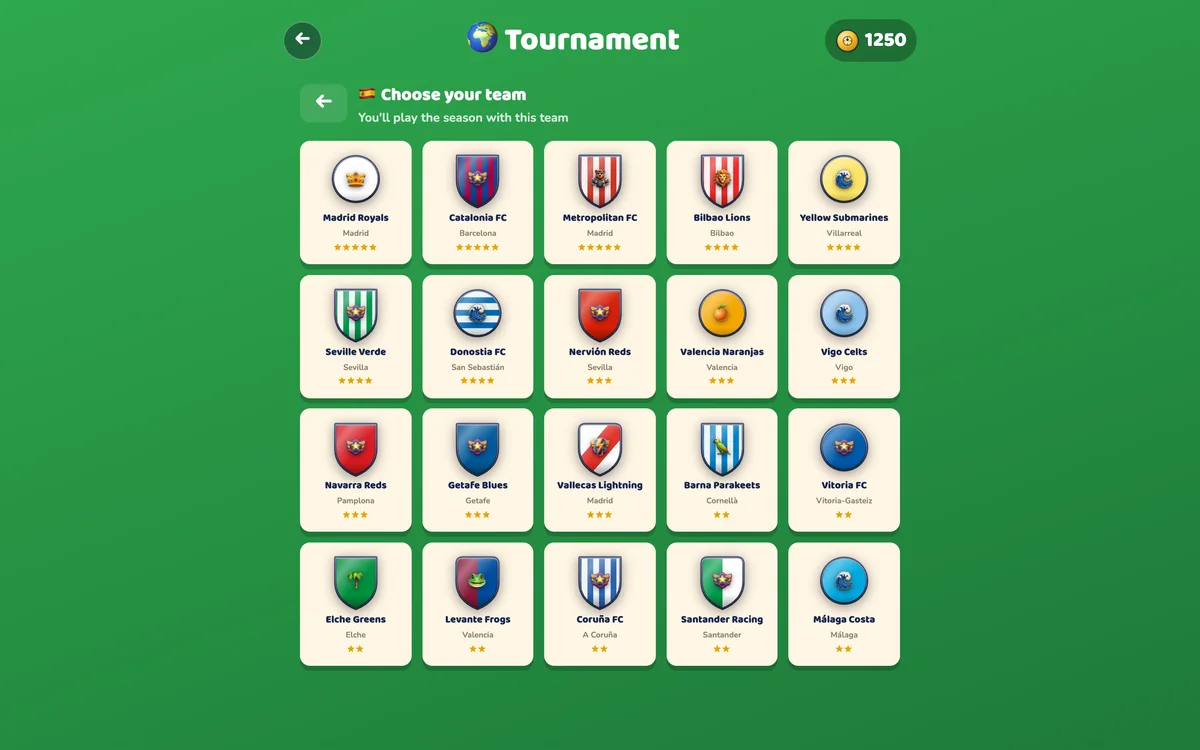
If the plan is a screen, look for games with a two-players-on-one-device mode — they pass the phone or share a keyboard, and the device acts as an impartial referee. In Toy Soccer Cup, for instance, the 2-Player mode is designed exactly for this (each player flicks on their turn), and the game's built-in leagues and cups serve as an automatic bracket when the organiser tires of drawing sheets. Winning combo for a birthday: paper bracket for the crossings, matches on screen, and the foil cup waiting on the shelf.
One last veteran tip: photograph the final bracket with all the results. Next year, when somebody demands a rematch — and somebody will —, having the "historical record" turns a loose afternoon into a family tradition. And traditions, like tournaments, need only one thing to exist: someone to start them.