The notebook
Long before consoles existed, in almost every country where football was played, kids found a way to bring it indoors. You did not need to buy anything: a table, something that rolled and something that hit it. Imagination did the rest. Every country invented its own school, and all of them are alive today — in grandparents' cupboards, in collectors' clubs and, in recent years, on screens too.
In Spain the king was the bottle cap — la chapa. You flattened it with a stone, decorated it with a footballer's face cut out of a magazine (owning your idol's face made you rich in playground currency) and flicked it with your index finger levered against your thumb. Schoolyard tournaments ran on rulebooks nobody ever wrote down yet everybody knew: three touches to reach the goal, no goal if the keeper's cap grazed it, and the eternal argument about whether that flick had been "with the nail" — a foul in some neighbourhoods, a masterstroke in others.
The fascinating thing about bottle caps is that they were a game of pure physics. No dice, no cards: the winner was whoever best controlled the strength and angle of their own finger. That is why they hooked a six-year-old and his father equally — skill is not inherited, it is trained.
In England, in the late 1940s, Peter Adolph turned that homemade idea into a legendary product: figurines on a dome-shaped base that wobbled when flicked with a fingertip, on a green felt pitch. Subbuteo grew national federations, world championships and collectors who painted team kits with a brush under a magnifying glass. Its secret was double: the delicious physics of a figure that teeters, threatens to fall and recovers — and the collecting itself, hundreds of teams in little green boxes begging to be completed.
Brazil developed its own branch in parallel: futebol de botão, played with large mother-of-pearl or acrylic buttons pushed with a ruler or paddle. Many real Brazilian clubs keep an official button team, there are state championships, and a beautiful workshop culture: players inherit buttons from their parents, file them, polish them and store them like jewels. There, tabletop football was never a seasonal toy — it is heritage.
Foosball (table football, baby-foot) belongs to the same family even if it plays on a different table: rows of players nailed to bars, pure reflexes, first-to-ten matches in every bar on Earth. Its great contribution is rhythm: at a foosball table you never wait more than two seconds between plays, and that electricity is the measuring stick for any self-respecting tabletop football, physical or digital.
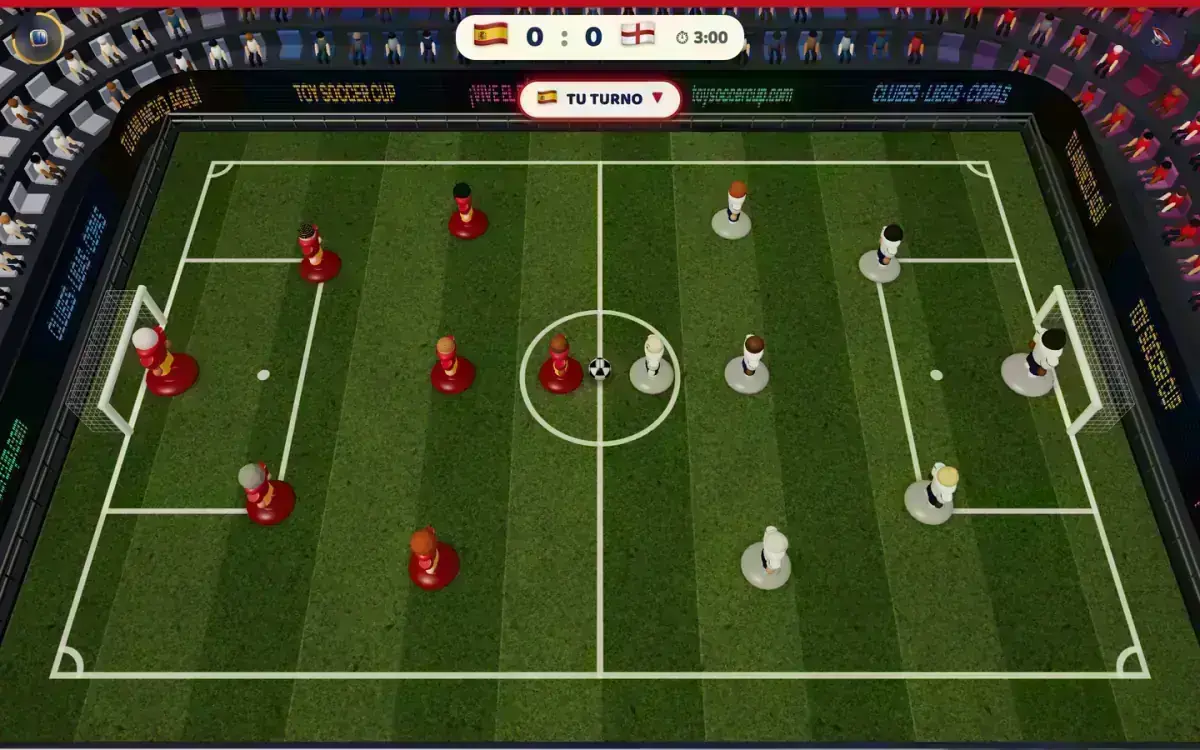
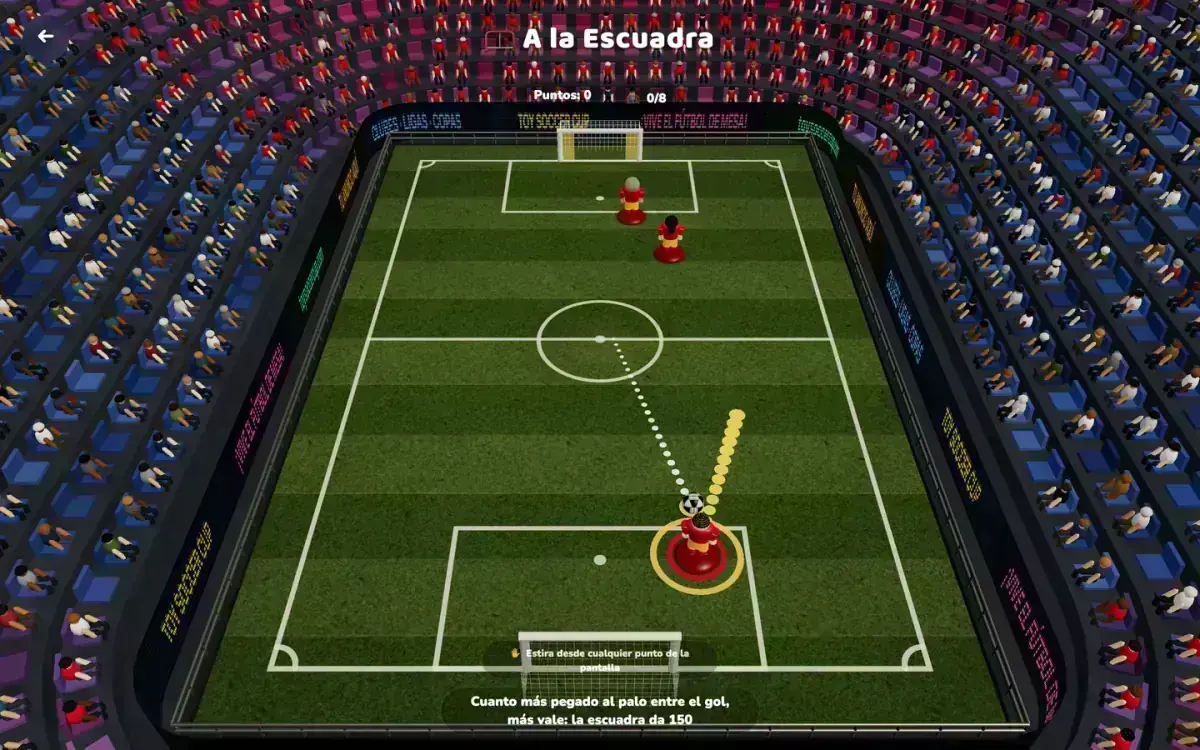
The generation that played all of this grew up, and some of them went on to make video games. Today there are digital heirs to every school — from officially licensed Subbuteo to independent flick-football games — that keep the essentials: the dry finger flick, the green felt, the collection, and the rematch ("one more, and this time you're done") as the eternal engine. Toy Soccer Cup, our browser tabletop football, belongs to that family: base-mounted figurines, honest physics and tournaments from all over the world, free and with nothing to download.
If this story tickled an old memory, ask at home: chances are somebody still keeps a box of caps or buttons in a cupboard. And if you prefer the version that takes no shelf space, you can play right here — the felt is already rolled out.