The notebook
The multiplayer in Toy Soccer Cup works as a ladder of arenas: win duels, earn trophies, climb; lose, and the ladder creaks. Matchmaking looks for rivals at your level, so you will almost always face someone your own size. Even so, first duels are intimidating — you are playing a real person, and real people do not forgive the way tutorials do. Here is the dressing-room talk.
There are two schools: the kickoff cannon shot straight at goal, and the calm opening that places two figures in defence. The cannon intimidates, but it rarely scores from midfield and leaves your figures scattered for the counter. High-arena players almost always open by securing: one figure covering the centre of their goal, another pressing the ball. Boring to describe, lethal to face.
The temptation to smash your figure into the rival cluster is as old as tabletop football. In games with fair-play rules — ours included — it costs you: knocking rivals over without playing the ball is a foul, and fouls gift the opponent an extra shot. In a close duel an extra shot is an eternity. Golden rule: if your flick is not going for the ball, don't make it.
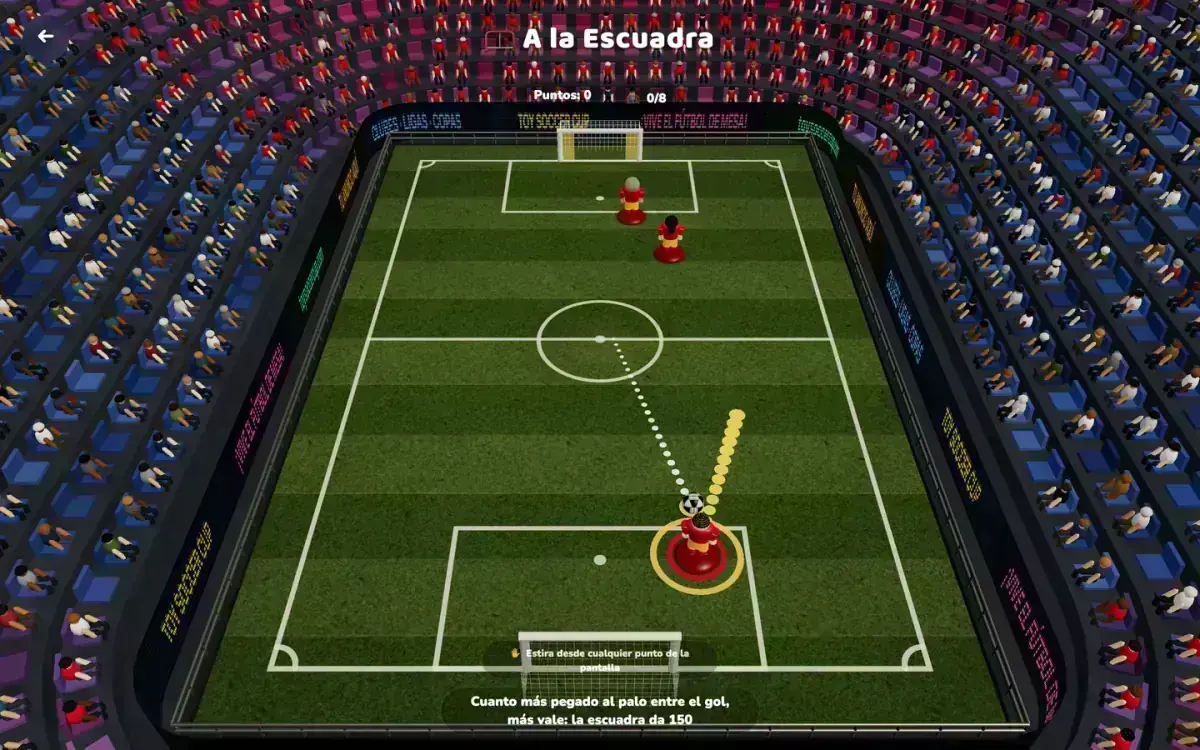
The slingshot begs to be stretched to the limit, and ninety percent of full-power shots end at the far touchline, leaving a corridor open to your own goal. Real goals are cooked at half strength: touches that walk the ball closer, a deliberate bounce off one of your own figures, then the short finish from a clean angle. "Soft" and "weak" are not the same thing — the difference between them is precisely your aim.
The goalkeeper moves on his own inside the box, but your defence decides how much work reaches him. The classic rookie mistake is sending all five figures forward; when the rival steals the ball, your keeper faces three strikers alone, and not even the best stops three angles at once. Always leave a bolt at the back. In tabletop football, as in the big kind, defences win titles.
Two goals up, consolidating beats showing off: holding the lead psychologically shortens the match and exasperates your rival. Two goals down, don't crumble — a single goal turns the entire wind of the duel, and in tabletop football comebacks are far more common than real football statistics would let you dream. Many games also include a "mercy rule" that softens blowouts: if you are three up, the match is already yours — finish it without humiliating anyone.
The turn clock squeezes, and hurried players shoot wildly. Breathe: nearly every turn system leaves ample time for ONE well-considered shot. Before stretching, ask two questions — does this shot improve my position even if it doesn't score? and what am I serving my rival if it goes wrong? If you like both answers, fire. That three-second pause is the difference between looking like a rookie and being one.
The full arena ladder, trophies and promotions are explained on the game modes page. The rest is learned where tabletop football was always learned: by playing. See you in the arena — we're the ones with the bolt at the back.